
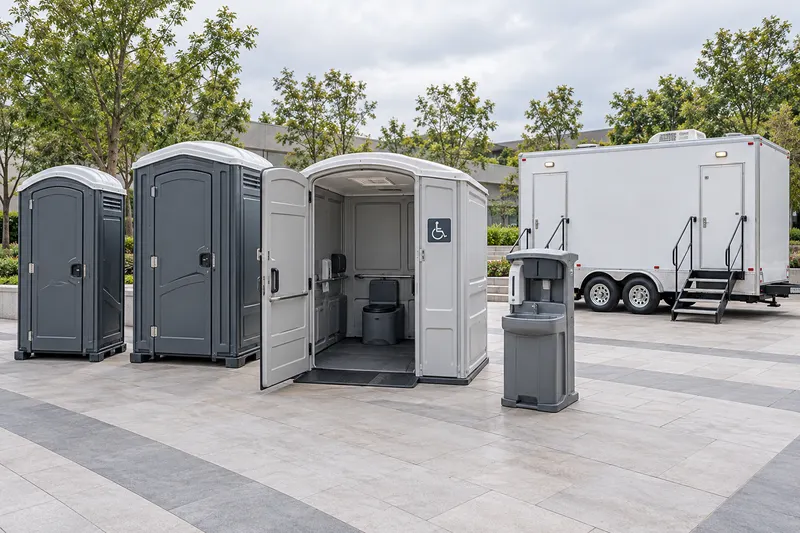
Separate guest facilities from food operations
Describe visitors, staff, occupied hours and available permanent bathrooms. Standard toilets, suitable accessible units and washing stations meet different needs; ask about actual model features and supplies.
Keep user approaches out of food queues and identify a service route that the organiser and provider can assess. Cooking waste, ordinary litter and toilet waste require separate agreed handling.
Agree access before the public arrives
When public activity closes a festival area to vehicles, sanitation servicing needs a place in the operating plan before the event begins.
St. Florian’s 2025 Oktoberfest food-vendor rules assigned setup slots and prohibited driving within the festival after it began. They also required vendors to manage trash and prohibited dumping cooking waste on Town property. These are conditions from that event, not a current universal vehicle rule.
For another gathering, ask the organiser when equipment may enter and how service can occur during use. A vendor setup slot should not be assumed to cover a toilet-service vehicle.
Include the time after the stalls close
Name a contact for cleaning, consumables and any blocked service route. Coordinate tank care and washing-water replenishment for the actual pattern of use.
Request equipment, dates, delivery, service and collection together. Include the clearing team’s working period and any post-event access restriction in the quotation discussion.
Questions before you book
Does a food-vendor slot permit a sanitation vehicle?
Confirm a separate service arrangement with the organiser. The vendor rules do not establish another supplier’s access.
Can ordinary vendor cleanup replace tank servicing?
No. Confirm toilet waste and washing-water care with the rental provider independently of litter or food-waste duties.