
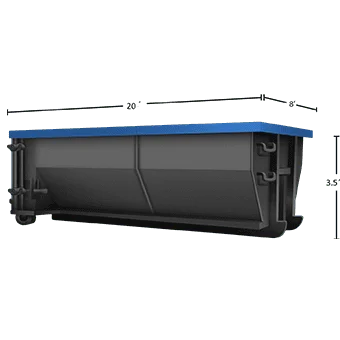
Choose the box and accepted loading arrangement
A roll-off is a removable container delivered and recovered by the provider’s handling vehicle. It holds an accepted load while you clear or work at the property; people carrying, sorting or loading the debris are a separate service unless expressly included. Describe the material and likely amount so the provider can assess the offered container, loading height and weight conditions rather than selecting by apparent empty space alone.
Discuss both the box’s standing area and the vehicle space needed to place and recover it. Confirm the offered loading arrangement, including any opening-door space, without assuming a particular model. State the planned loading period and ask for delivery, recovery and disposal terms, plus any agreed extension or replacement. Give contributors the accepted-material instructions; if something uncertain is already in the box, follow the provider-review steps below instead of continuing to load.
Report what is known about the item and load
If an item in the roll-off may fall outside the accepted material list, stop adding to that load and contact the provider. Resolve the uncertainty before covering the item with more debris or treating the original collection instructions as unchanged.
Identify the container and describe the item from information already available, such as a known product name or packaging visible from outside. Explain when it was noticed and what other material is in the container. Do not climb into the load or handle an unknown item to complete the report.
Compare the information with the accepted materials in the order. If its identity or condition is uncertain, say so. A container’s spare capacity does not establish that a different material is acceptable, and an ordinary waste list does not classify an unidentified substance.
Keep the next instruction with the provider
Ask whether the provider needs further information or a separately arranged assessment before it can give a next step. Do not move the item into another rented container, dilute or conceal it, or attempt an improvised removal from the load.
Tell the responsible site contact that further loading is on hold for that container. Keep people from disturbing the uncertain material and preserve the agreed vehicle approach. If the provider requires a different handling arrangement, establish who is authorised and equipped to carry it out rather than assigning the task casually to another trade.
Reconfirm collection after the issue is resolved
Once the provider has reviewed the information and accepted a next step, confirm what must be completed before the collection request can proceed. Report any remaining change in the load or its condition; do not assume the original appointment still covers it.
Review the resulting container, material, transport and disposal scope, any additional handling and the agreed dates. Ask how a change affects the quotation without assuming a fee or a free correction. For later loading, give every contributor the accepted material instructions so the same uncertainty is not introduced again.
Questions before you book
Can another layer of accepted debris cover the uncertain item?
Pause loading and describe the issue to the provider. Covering it does not resolve whether the material can be accepted.
Should someone climb in to remove it before collection?
Do not improvise a removal from the load. Obtain the provider-reviewed next step and confirm who is authorised and equipped for any required handling.